

NEWS
NEWS
How can we improve the structure of heat-sink of led lamps to facilitate the heat dissipation at stationary place
04-04-2026
An heat sink is a device specifically designed to absorb and dissipate the heat generated by LED chips. It acts as a heat exchanger, transferring the thermal energy from the LED work lamp to the surrounding ambient air. This process ensures that the LED operates at an optimal temperature, preventing overheating and maximizing its efficiency.
Heat sinks are typically made from aluminum alloy materials with high thermal conductivity. The aluminum allow for efficient heat transfer, ensuring that the heat generated by the LED work lamp is effectively dissipated.
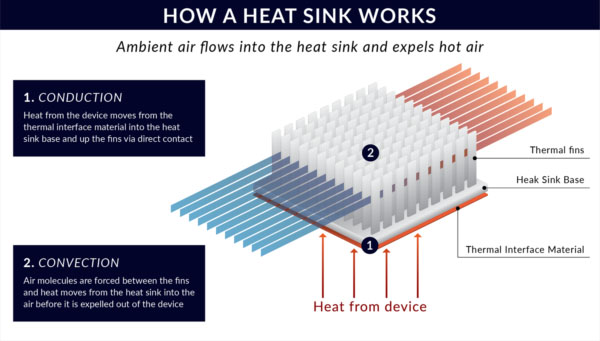
To improve the heat-sink structure of a LED work lamp for installation on stationary place, the cooling focus must shift from forced air on moving vehicles to passive natural convection and heat conduction efficiency. When a work lamp is for stationary illumination, the air surrounding it remains relatively still, creating a "thermal envelope" that can trap heat if the design is inefficient.
In a stationary environment, the spacing between fins on aluminum housings is critical. If fins are too close together, the boundary layers of heated air overlap, blocking the airflow and preventing "chimney effects."
For natural convection, a gap of 6mm to 10mm is generally more effective than the dense, thin fins around them high-speed coolers are installed
Ensure fins are aligned vertically. This allows heated air to rise naturally along the channels, pulling cooler air in from the bottom.
Designing fins that are thicker at the base and thinner at the tip helps take heat away from the PCB more efficiently while reducing the overall weight of the led work lamp.
Also, structural cut-outs or "through-holes" in the heat sink at the back of aluminum housings can improve heat dissipation performance much.
By placing vent holes at the top and bottom of the aluminum housing, you create a pressure differential. As the LED chips and other electronic components heat the internal air, it rises and escapes through the top vents, drawing cooler air in through the bottom.
Instead of continuous longitudinal fins, breaking the fins into a "pin-fin" or staggered pattern allows air to move horizontally as well as vertically, which is helpful if the led work lamp is mounte at an tilted angle.
The bottleneck in heat dissipation often occurs at the junction where the LED chips meets the heat sink.For high-power LED work lamps, integrating a copper heat pipe into the aluminum base can transport heat from the concentrated "hot spot" of the LED chips array to the outer edges of the fins much faster than solid aluminum material alone.
Increasing the "micro" surface area through sandblasting or chemical etching before anodizing process provides more surface contact for the air molecules to carry away heat.Finally, By prioritizing the vertical flow of air and minimizing thermal resistance at the PCB junction, you can lower the junction temperature of the LED chips greatly, extending their lifespan and maintaining durable brightness during long periods of stationary use.
Heat sinks are typically made from aluminum alloy materials with high thermal conductivity. The aluminum allow for efficient heat transfer, ensuring that the heat generated by the LED work lamp is effectively dissipated.
To improve the heat-sink structure of a LED work lamp for installation on stationary place, the cooling focus must shift from forced air on moving vehicles to passive natural convection and heat conduction efficiency. When a work lamp is for stationary illumination, the air surrounding it remains relatively still, creating a "thermal envelope" that can trap heat if the design is inefficient.
In a stationary environment, the spacing between fins on aluminum housings is critical. If fins are too close together, the boundary layers of heated air overlap, blocking the airflow and preventing "chimney effects."
For natural convection, a gap of 6mm to 10mm is generally more effective than the dense, thin fins around them high-speed coolers are installed
Ensure fins are aligned vertically. This allows heated air to rise naturally along the channels, pulling cooler air in from the bottom.
Designing fins that are thicker at the base and thinner at the tip helps take heat away from the PCB more efficiently while reducing the overall weight of the led work lamp.
Also, structural cut-outs or "through-holes" in the heat sink at the back of aluminum housings can improve heat dissipation performance much.
By placing vent holes at the top and bottom of the aluminum housing, you create a pressure differential. As the LED chips and other electronic components heat the internal air, it rises and escapes through the top vents, drawing cooler air in through the bottom.
Instead of continuous longitudinal fins, breaking the fins into a "pin-fin" or staggered pattern allows air to move horizontally as well as vertically, which is helpful if the led work lamp is mounte at an tilted angle.
The bottleneck in heat dissipation often occurs at the junction where the LED chips meets the heat sink.For high-power LED work lamps, integrating a copper heat pipe into the aluminum base can transport heat from the concentrated "hot spot" of the LED chips array to the outer edges of the fins much faster than solid aluminum material alone.
Ensure the LED chips are mounted on a copper-base PCB rather than an FR4 or aluminum-base board to lower the thermal resistance (Rth) at the source.
While conduction moves heat through the aluminum housings and heatsink, radiation accounts for cooling much for led work lamps at stationary place.
Increasing the "micro" surface area through sandblasting or chemical etching before anodizing process provides more surface contact for the air molecules to carry away heat.Finally, By prioritizing the vertical flow of air and minimizing thermal resistance at the PCB junction, you can lower the junction temperature of the LED chips greatly, extending their lifespan and maintaining durable brightness during long periods of stationary use.
©Copyright: 2008-2026 Guangzhou TEEHON Electronics Co., LTD. 