

What major beam patterns are required for auxiliary offroad led bike lights
06-06-2026To handle this safely, an auxiliary off-road LED light setup relies on three major beam patterns, usually split between a handlebar mount and a helmet mount.
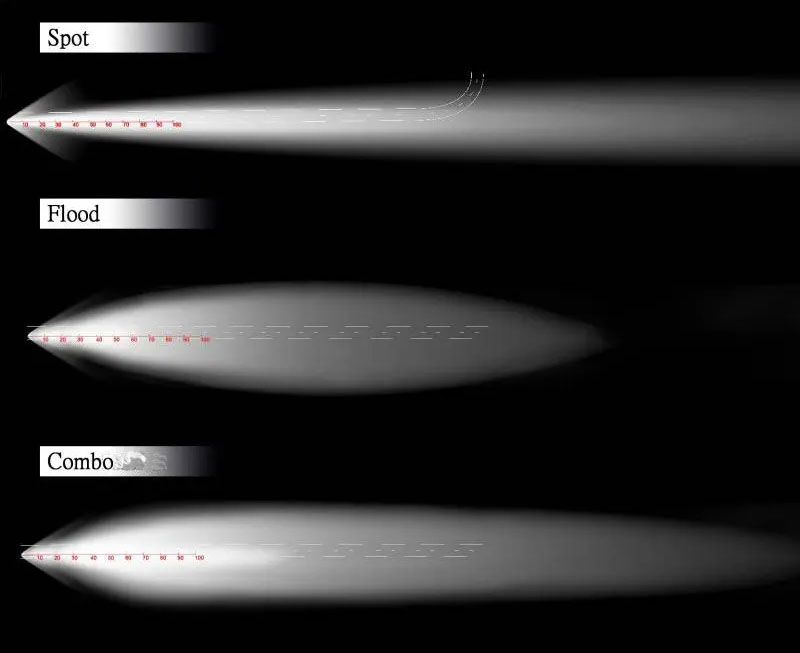
An auxiliary offroad led light with wide beam pattern throws a wide, horizontal wall of light widely and directly in front of the bike. Installed on handlebars of bikes, it illuminates peripheral zones, helping the rider see trail edges, rocks, and upcoming turns. A smooth, diffused beam without harsh glare prevents tunnel vision and reduces eye fatigue.
In contrast, an auxiliary offroad led light with spot beam concentrates the light into a narrow, intense cone to push the throw as far down the trail as possible.
When descending at high speeds during the mountain riding, riders outrun their led headlights if the throw is too short. A much focused spot beam gives them the reaction time needed to spot obstacles early.
Most often ,this led spot light is installed onto helmet. As a spot beam on the handlebars only points where the bike is facing, mounting it on the helmet allows the rider to shoot a long-range beam exactly where they are looking—much important for looking through sharp switchbacks before the bike turns.
Many premium off-road bike setups adopt dual or multi-LED configurations where some LED lights utilize total internal reflection lenses or smooth reflectors for long distance, while others use textured lenses to spread the light wide. Combo beam based on hybrid and dual optics can help give a self-contained, balanced field of view.
Unlike road-legal bike preinstalled led lights designed to comply with safety standards that have a sharp horizontal cut-off to prevent blinding oncoming traffic), auxiliary off-road led lights require vertical scatter. Without vertical light spill, riders cant see low-hanging branches or sudden dips in the terrain.
In terms of color temperatures, auxiliary Off-road led lights perform significantly better with a neutral white or slightly warm color temperature such as 4000K to 5000K with a high Color Rendering Index (CRI). Cool daytime white light temperature up to 6000K+ tends to wash out the trail, flattening details and making it incredibly difficult to distinguish between dirt, mud, and rocks. Warm, high-CRI offroad led light enhances depth perception and throw contrast on rugged terrain.
©Copyright: 2008-2026 Guangzhou TEEHON Electronics Co., LTD. 