

What more intelligent technologies might be seen in automotive led work lights in the year 2027
07-11-2026
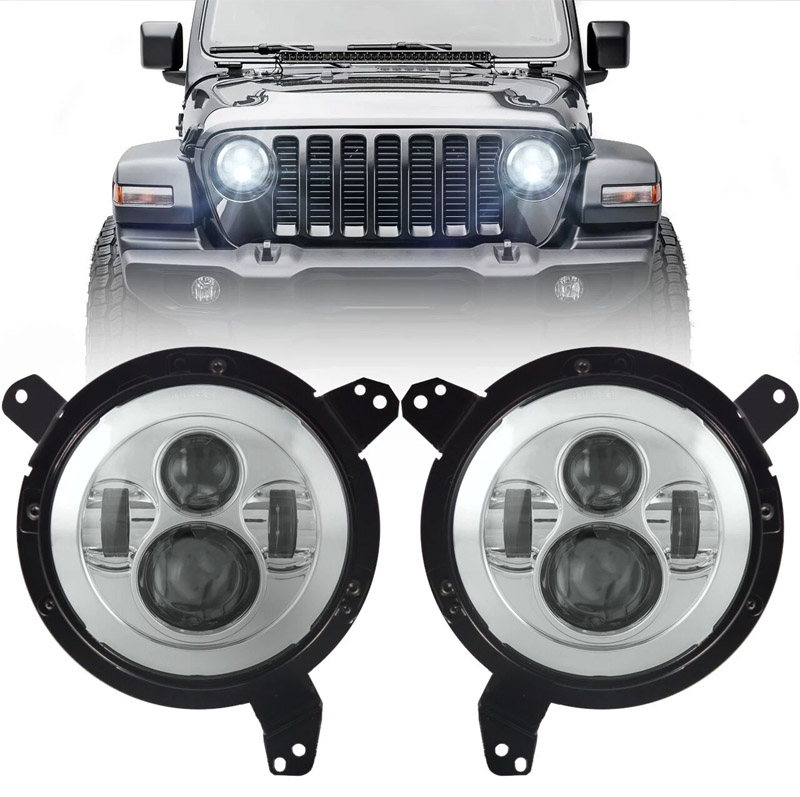
Automotive LED work lights such as off-road LED auxiliary pods, long led light
bars, heavy-equipment led work lamps, and dual color or multi color led strobe emergency
lights—are developing from simple bright fixtures to connected, adaptive
devices. Driven by technological developments in micro-controllers, sensor
integration, and thermal efficiency, intelligent technologies are defining
modern work lights.
Traditional LED work lights rely on passive aluminum heat sinks. When LED fixtures run hot, standard driver boards perform stepped thermal throttling, causing noticeable drops in brightness.
Smart micro-controllers monitor real-time junction temperature on the lamp alongside ambient conditions. Instead of sudden dimming, algorithm-driven pulse-width modulation (PWM) continuously fine-tunes current draw to maintain maximum usable lumen output right at the thermal edge without damaging the lamp.
High-output LED work lights for stationary installation are using micro-piezoelectric active cooling or solid-state thermal pumps that activate only under extreme load, keeping light output stable in harsh environment conditions without embedding mechanical fans.
Inspired by passenger car Matrix LED headlights, LED work lights are introducing adaptive pixel and zone lighting tailored for job sites, off-road adventure, and emergency service vehicles.
LED work lights equipped with basic optical Time-of-Flight (ToF) or ultrasonic sensors detect oncoming personnel, machinery, or side mirrors, dynamically dimming specific LED zones while keeping the surrounding work area at super brightness.
When connected to a vehicles CAN bus or internal IMU (Inertial Measurement Unit), led light bars dynamically switch beam distribution: widening into a flood pattern at low working speeds and narrowing into an intense spot beam at high speeds or along steering angles.
Hardwired rocker switches are increasingly replaced by integrated digital
control nodes. LED work lights embed directly into
standard vehicle multiplex systems (J1939 for heavy duty equipment/commercial
fleet, CAN for automotive). This allows automated control based on vehicle
states—such as triggering high-intensity side-flood lights automatically when changing
into Reverse or setting equipment outriggers.
Sometimes,Bluetooth Low Energy (BLE) Mesh allows crews to synchronize multiple LED auxiliary lights, LED strobe warning lights, and cabin lights across multiple vehicles simultaneously without running complex control wiring.
For LED warning and emergency utility lights, intelligence improves
visibility and battery management. Built-in ambient light sensors evaluate daylight versus nighttime
conditions to adjust strobe patterns automatically. This avoids blinding nearby
operators during night work while retaining maximum optical power under direct
sunlight.
Wireless sync algorithms allow surrounding emergency or service vehicles
to align flash rates and phases automatically, reducing visual confusion and
creating clear directional lighting signalization for oncoming traffic.
For fleet operators in terms of mining, construction, agriculture, and
municipal fleets), smart LED work lights double as diagnostic endpoints.
Internal monitoring system tracks cumulative operating hours, voltage spikes, thermal exposure cycles, and driver efficiency. Maintenance teams receive automated alerts over telematics before an LED module or internal driver ic fails.
Integrated power management systems communicate with the vehicle battery management system (BMS). If engine-off battery levels drop below a threshold, the light will reduce power consumption or changes to high-efficiency flash modes to preserve starting power at safety level.
©Copyright: 2008-2026 Guangzhou TEEHON Electronics Co., LTD. 